
A few weeks ago, my oldest grandson Weston was visiting. The weather report threatened snow and boy was he excited. We waited and waited, but so did the snow. It was cold and every now and then we would see snowflakes, flurries, and light snow, not enough to stick. A few days later we put West on a plane and sent him home. Of course the next morning the snow absolutely dumped on us. And because it was cold – And because it was high precipitation, we got inches in inches of blanketing snow and it stuck. Sorry Weston!
That same week, the mailman (through rain and snow) delivered a beautiful book to number two grandson, Viggo, a gift from the Dolly Parton imagination library, (which, by the way, can I pause here and say what a gift that woman is?) The title of the book was “Ten Ways To Hear The Snow.” It was a beautiful book with lovely illustrations and impeccably timed.
As a side note, if you are looking for great snow books, as well as “Ten Ways” check out “Blizard” by John Rocco. When I was the school librarian I read it every year after it snowed. I even read it with older kids because it was based on a real event. I would read the note in the back and let kids know that inspiration for writing can come from simple/unexpected places. ”Blizzard” is one of those books that has a lot of different levels.
But back to snow…. I read somewhere that the Inuit People have 100 words for snow. I don’t know if that is true, but having been raised in Alaska, I imagine it is close. Living near snow is a little like living near the ocean, I cannot imagine being anywhere else. I certainly don’t have 100 words for snow, maybe for rain, but not for snow. Not a hundred, but I do have a lot. I have a snow vocabulary!
As a child I would stand under a streetlight on inky nights and stare transfixed at the snow as it drifted under the warm lights. I watched flakes that were crystalline, clearly defined, unique, and beautiful, laying on my gloved palm for just a minute before melting. I watched flakes that were little puffs. Cottonballs, soft and floaty, the kind to catch with your tongue. I watched flakes that moved like feathers, light, swirling, and dancing.
I could spend hours watching the snowfall. Well-bundled, thick leather mittens tied with a string. Hat, lovingly knit by my grandmother, slightly too big, sliding down over my eyes, puffy coat. Snow pants. “Snow boots,” clunky and lined with bread bags -cozy and warm. It was dreamy and peaceful.
Snow as a blanket, soft as a cloud – puffs like powdered sugar when you fall backward into it. Branches bow under the weight, thickly covered with snow that will soon grow heavy and fall, leaving divots at the base of the tree. There is nothing as beautiful as an untouched snowy field. So much so, that I would feel sorrow if someone trudged through the yard, leaving forever prints. So you moved reverently through that blanket of snow. The sound is muffled. Still. Peaceful and calm. These were the kind of nights that we would put on cross-country skis and find a lighted trail and it was almost magical.
Cold days. Clear days and your breath hung like a fog, your cheeks would sting when you came inside, And when you walk? Your feet made that sound, that squeaking sound as you moved across the snow. The sky an icy blue, a haze around the edges, and the hours are short. The trees are coated in a sparkling glaze of ice – hoarfrost. From the eves icicles hang like frosting on a gingerbread house – and yet….they could almost look menacing. How many of them did we break off and sword fight with? Throw like a spear? Or eat like popsicles? Who could find the longest? Sharpest?
There was nothing like that first dusting of snow on the mountains, days were getting shorter, the air was getting a bite and it meant school days had started – weekends would soon be spent at the ski area. The fall ski exchange and the annual Warren Miller ski movie.
Speaking of skiing – so many snow words. Powder. I remember those days – early early mornings – my dad rushing us to get to the mountain so we could get a few runs in before the fresh powder was ruined – or a dreaded crust would form. There was nothing as cool as riding the chair on that first run and watching the good skiers kick up powder- sinking into virgin snow with each turn. That was always the dream. Fresh powder. Pow-pow.
More often the snow was Packed. Moguls carved into little mounds over time. The magic when my dad taught me to just “find the rhythm.” Packed snow also meant hard, cement snow. Icey snow that you had to carve, carve, carve, or go flying out of control. It might mean crud or corn snow, and even though it was tough to ski in, it was fun. Challenging, and exhausting, and your legs would shake when you were done, but it was fun.
Our family was a little sad when we moved to Ketchikan and realized there really wasn’t snow to speak of. Scott tried hard to get a cross-country trail put in up at Harriet Hunt Lake. He built a sled that would set track and convinced a snowmobiler to drag it, but the trail was quickly destroyed and we put our skis up in the attic. The snow here was Wet. And because it was wet, it was sticky. It mixed with rain and became sleet. Hail. Slush. It didn’t last long before a rain would come and wash it away. But. Because it was wet, heavy, and sticky it was great for snowmen and snowball fights. It packed down well for sledding, and we found new snow activities.
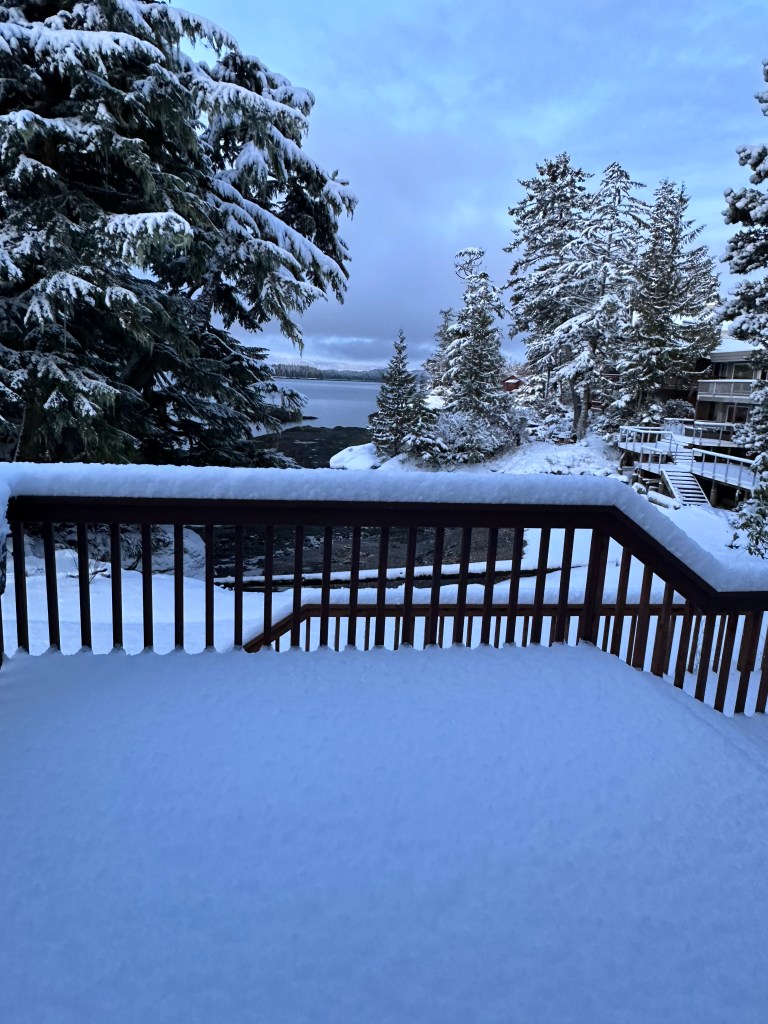
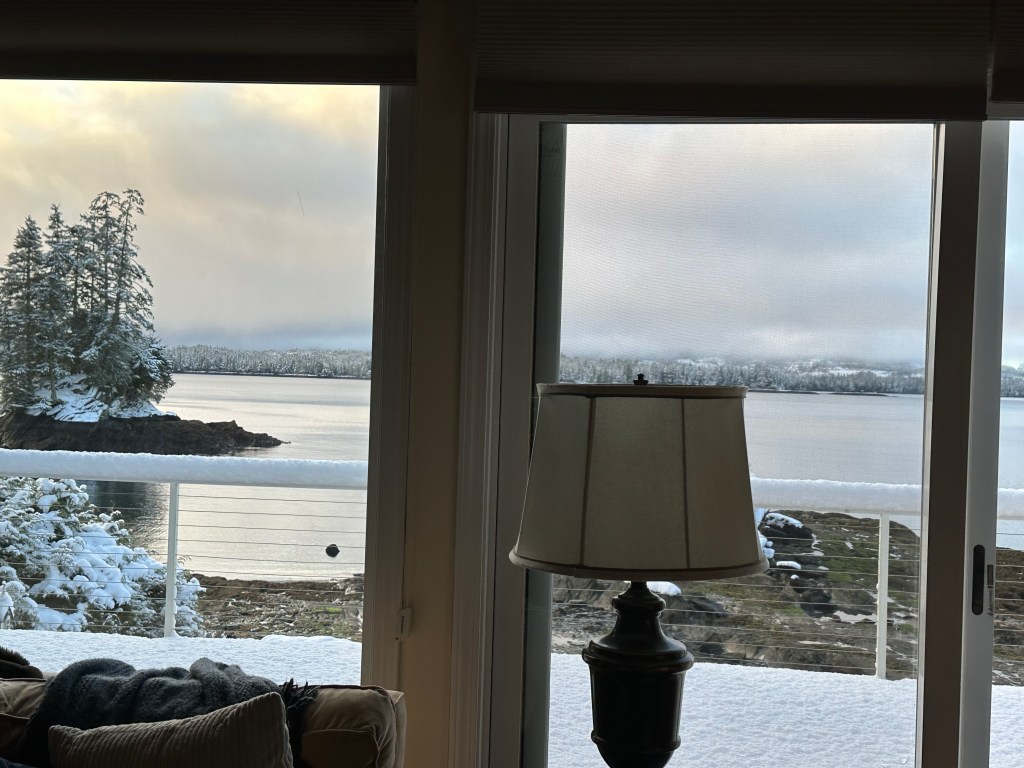
After Weston left it snowed here. It was stunning. It lasted four days, and my social media was filled with pictures! 296 people had put pictures on a community post (!!) and I looked at nearly every one of them! It seems we all have our own special snow vocabulary and appreciate the beauty of a snowy day – we were all taking pictures! Tt was so unique and beautiful and I was sorry Weston missed it!


If you are interested here is the link to Blizzard by John Rocco
and Ten Ways To Hear The Snow by Cathy Camper
(Also. There are maybe 30 snow words here, I am sure there would be more if I had Scott help me brainstorm, but I think you get the idea.)
 bethlovesblue